Security & Smart Home Installation in Silves
Know your Silves property is fine without driving over to check.
Town houses near the castle and quintas in the countryside — two property types, one point of contact.
Coming soonContact details coming soon
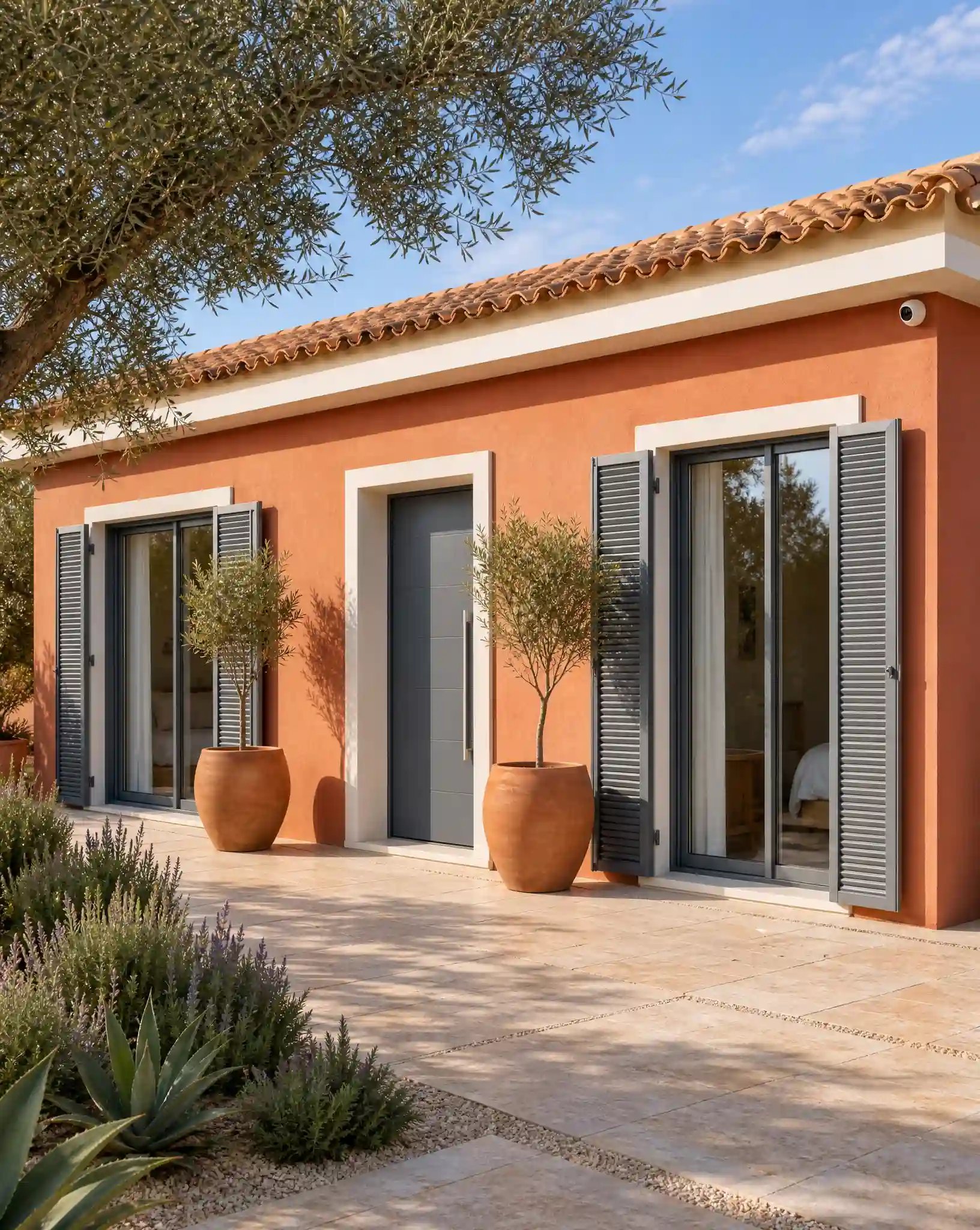
Security & smart home services for Silves properties
All seven services are available here, each planned around how Silves properties are actually used.
CCTV Installation in Silves
Rural quintas with larger boundaries benefit from coverage across the approach and grounds.
Learn moreAlarm Systems in Silves
Intruder alarm systems with motion sensors, connected control panels and app-based alerts, for villas, apartments and holiday homes.
Learn moreAccess Control in Silves
Historic town-centre properties benefit from electronic locks without altering original doors and frames.
Learn moreGate Automation in Silves
Motorised gates and barriers, plus security doors and sectional gates, with remote and app control.
Learn moreFire Detection in Silves
Optical smoke detectors and addressable fire panels, built for prevention, safety and a quick response.
Learn moreHome Networking in Silves
Country properties on the outskirts need a network planned to reach across a larger plot.
Learn moreSmart Home Automation in Silves
Connect supported devices without assuming every system shares one app.
Learn moreSecurity & smart home installation in Silves
Silves is an inland town with a growing number of expat homeowners drawn to its quieter pace. Whether it's a villa, apartment or holiday rental, systems are planned around how the property is actually used — and every step is explained in English.
Silves is an inland, historic town with a growing number of expat homeowners, and a property mix that runs from town houses in the centre to rural quintas on the outskirts. Rural properties tend to need more thought given to networking and CCTV coverage across a larger boundary, while town-centre properties are usually more straightforward access control and alarm installs.
Coming soon
What to know before installing in Silves
Property Types & Profile
Silves has two fairly distinct property types: historic town houses in the centre, close to the old castle and cathedral, and rural quintas and country properties on the outskirts. The inland setting means fewer holiday-villa developments than the coastal towns, and a higher share of owners living in the property full-time or for extended periods.
What Owners Tend to Ask About
Town-centre owners deal with the same discretion and shared-wall considerations as any historic core, while rural quinta owners further out have to think about larger boundaries, longer driveways and a network connection that has to reach across more ground. Both groups tend to be less focused on holiday-rental turnover than the coastal towns and more on straightforward day-to-day security.
Older wiring, new equipment and a realistic upgrade plan
When considering security upgrades at an older property in Silves, existing wiring should be assessed before it is assumed reusable. The condition, route and suitability of a cable matter more than the fact that a device once worked on it. An alarm-system assessment can identify usable components and where replacement or new wiring may be needed. The same principle applies to cameras and intercoms. A site survey should distinguish security equipment work from electrical repairs that require the appropriate professional.
Agree cable routes and mounting positions before installation begins, particularly where finishes are being retained. A wireless option can sometimes reduce cabling, but it introduces its own battery, radio-range and maintenance requirements. It should not be presented as universally better or completely maintenance-free. A written scope should state what will be retained, replaced and tested, and which areas cannot yet be assessed. That prevents an attractive equipment list hiding the practical work needed to make the system dependable.
Entrance cameras and alarms for a house with outbuildings
For a Silves home with a garage, store or workshop, decide whether these spaces need the same protection as the main house. A separate alarm zone may allow an authorised person to enter a workshop without disarming occupied accommodation. Cameras may help review an entrance, but their coverage depends on position, lighting and the connection to the recorder. A single wide image of several buildings may not show useful detail at any individual door.
Camera planning should also consider how footage is stored and who may view it. If a recorder reports a disk problem, preserve any important recordings and arrange assessment before resetting or changing storage. For an outdoor unit which disconnects intermittently, check power and network links rather than assuming the device has failed. State what happens during a power or internet interruption so that remote access is not mistaken for uninterrupted protection.
Making daily entry easier without weakening the basics
A difficult gate or sticking door needs its underlying condition checked before smart controls are added. Gate automation requires a suitable, safely moving gate and appropriate protective devices. Door-entry systems need a compatible lock and reliable closing action. App control is a convenience layer, not a remedy for mechanical faults. For either system, make sure there is a documented, safe way to enter if normal power or communications are unavailable.
If a home is being renovated, it can be useful to coordinate lighting controls, data routes and security wiring while access is available. Prioritise functions occupants will use and retain understandable manual operation. For safety equipment such as fire detection, discuss appropriate design and maintenance separately rather than treating it as another optional automation. Our Lagoa and Monchique pages cover nearby service areas, with every proposal based on the individual property rather than a standard package.
What to note before an existing system is inspected
If a camera, alarm or entry system is unreliable, a short record of symptoms can be useful. Note the affected device, the time of the fault, any message displayed and whether it followed a power interruption or another change. Identify whether the problem affects one unit or several. Do not dismantle equipment, disconnect safety devices or reset storage to gather information. Photographs of visible model labels and screens may help identify equipment without altering how it operates.
For a system inherited with the property, gather manuals and existing documentation if available. List known users and establish who currently controls the administrator accounts. That information can help plan a secure transfer or recovery process before upgrades are considered. The assessment may find that some components are serviceable while others need attention. A clear record makes it easier to distinguish necessary work from optional replacement and reduces the chance that a useful existing installation is discarded without understanding its condition.
Frequently asked questions about Silves
Do rural quintas near Silves need different networking than the town-centre houses?
Usually — quintas cover more ground, so a network has to reach further and more reliably, while town-centre houses are a more contained setup.
Are historic buildings in central Silves harder to fit with access control?
Not usually a barrier — electronic locks and readers can generally be fitted to existing doors without needing to alter the building's original features.
Are properties right next to Silves castle treated any differently to ones a few streets away?
Not fundamentally — proximity to the castle itself doesn't change the approach, though the age and construction of a specific building always shapes how access control gets fitted, castle-adjacent or not.
Do rural quintas near Silves typically already have some fencing or walls to build camera coverage around?
Often partial fencing or a boundary wall on one or two sides, rather than a fully enclosed perimeter — coverage is planned around what's actually there rather than assuming a complete boundary already exists.
Is a rural quinta's network usually starting from nothing, or is there normally some existing connection to build on?
Usually some existing broadband to build on, though its quality and reach across the property varies enough that it's worth assessing before assuming it'll support cameras and an alarm without changes.
Can access control be added to a historic property in Silves without altering the original doors?
Yes — town houses near the castle and cathedral are fitted the same way as any period building: electronic locks and readers working with the existing door and frame, rather than assuming a rural quinta's more flexible construction applies to a historic-centre property.
What's the difference between securing a shared apartment building and a standalone house in Silves?
There's less of a shared-building question here than in a denser coastal town — Silves is mostly historic town houses and rural quintas, both typically fitted independently, rather than the stairwell-and-intercom setup you'd see in a large apartment block.
Do rural quintas near Silves face the same connectivity questions as properties further into the hills?
Similar in principle, though usually less severe — Silves's rural quintas tend to be closer to the town and its infrastructure than the more remote settings further west, but a boundary-to-boundary network check is still worth doing rather than assumed.
Do rural quinta gates near Silves need anything different to automate compared to a coastal villa gate?
Not fundamentally — the same assessment applies: checking the gate's condition and whether it can take a motor as-is — though a quinta's longer, less formal driveway sometimes calls for a different gate type than a short villa entrance.
Speak to Algarve Smart Home about your property in Silves
Contact details are coming soon. Explore the services relevant to your property.
Coming soon